

Across Detroit and nearby communities such as Royal Oak, Ferndale, Southfield, and Berkley, we are seeing more microgreens on plates. They top avocado toast, brighten salad bowls, and add texture to sandwiches, but when we start researching, the phrase “microgreens vs sprouts” can get confusing fast.
Are they the same thing? Are they grown the same way? Is one healthier than the other? There are so many questions surrounding this.
In this blog, we’ll clearly break down the differences between microgreens and sprouts in terms of safety, flavor, nutrition, and how to actually use each in everyday cooking. By the end of this blog, we will also have a better understanding of what to look for in a fresh, ready-to-use option.
First Things First: What Are Microgreens and What Are Sprouts?
Before comparing anything, we need clear definitions of both microgreens and sprouts.
What Are Microgreens?
When people ask what microgreens are, the simplest answer is that they are young green vegetables harvested just after the first true leaves appear. Microgreens are grown in trays or a growing medium. They do not float in water. At Planted Detroit’s vertical farm, they are cultivated indoors in a carefully monitored environment. They are also harvested above the root line so we can eat the stems and leaves, but not the seeds.
Microgreens are small, but they are fully formed baby plants.
What Are Sprouts?
Sprouts are germinated seeds grown in water or very moist environments. When it comes to sprouts, we can eat the entire thing, including the seed, root, and shoot.
They are typically grown in jars or in dense, humid systems. Unlike microgreens, they are harvested much earlier, before leaves develop. It’s important to note that Planted Detroit specializes in microgreens and not sprouts.
A quick snapshot difference between microgreens and sprouts is that the former has more leaf and stem, while the latter is mostly seed and germinated shoot.
How Microgreens vs Sprouts Are Grown (And Why It Matters)

The biggest differences between microgreens and sprouts stem from how they are grown.
Microgreens are grown in controlled, indoor vertical farms where light, water, and airflow are carefully monitored. The seeds are placed in trays with intentional spacing, and harvesting is done with care. This system reduces exposure to external contaminants and enables year-round growing, which is especially important during long Michigan winters. Sourcing microgreens from a trusted local ensures consistent quality.
Sprouts, by contrast, are typically grown in dense, moist environments where warmth and humidity help seeds germinate quickly. However, those same conditions can allow bacteria to grow if not managed properly. Sprouts have been recalled over the years because the seed itself can carry bacteria that multiply during germination. That does not mean sprouts are unsafe, but it does mean growing conditions matter. In comparison, microgreens are considered safer in most households and restaurants.
Nutrition, Flavor, and Texture: Microgreens vs Sprouts on the Plate
Once food reaches our plate, taste and texture become the deciding factors. Both microgreens and sprouts are nutrient-dense, but they offer slightly different benefits.
Microgreens often contain concentrated levels of vitamins and phytonutrients, while sprouts provide fiber and plant-based protein from the seed itself. This is not about declaring a nutritional winner but about understanding what each brings to the table.
The difference is even more noticeable in flavor and texture. Microgreens can be peppery, nutty, mildly sweet, or herbaceous, depending on the variety. Garden Mix Microgreens add color and brightness, while Broccoli Microgreens offer a slightly nutty, brassica flavor. Sprouts, on the other hand, are typically crunchier and more watery, adding a bulk texture with a milder taste.


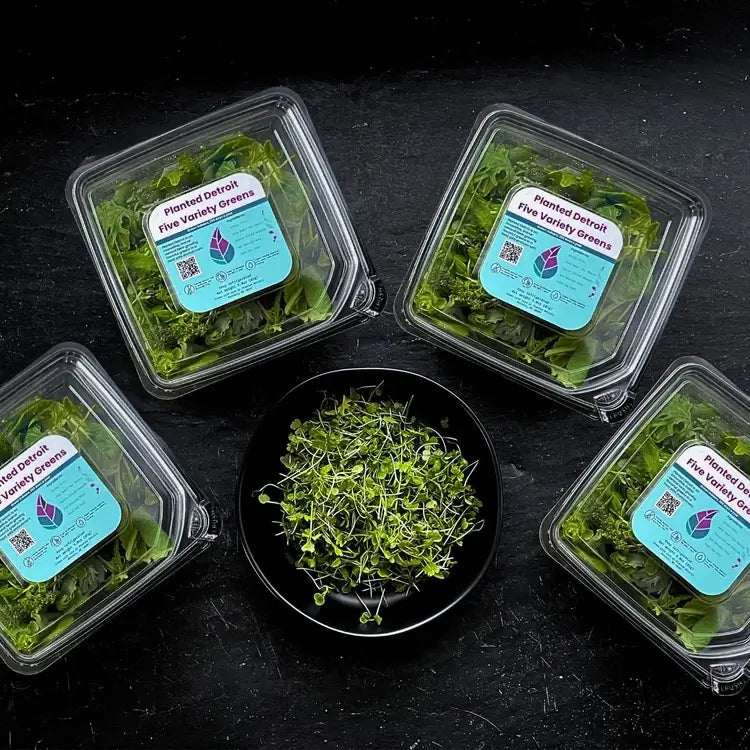
When comparing microgreens and sprouts, microgreens typically stand out for their wider range of flavors and visual appeal, while sprouts are valued for their crisp crunch.
Safety and Storage: Which One Fits Everyday Detroit Kitchens Better?
Food safety and flexibility matter in busy homes.
Food Safety Considerations
Because sprouts grow in warm, moist conditions, they have historically been linked to more frequent recalls. Microgreens grown in a carefully managed vertical farm environment are often easier to monitor and handle safely. For families in Detroit, Royal Oak, Ferndale, and Warren, that adds a layer of control can feel reassuring.
Storage
Microgreens should be refrigerated in breathable containers and used within a few days for the best texture. Sprouts have an even shorter shelf life and must be consumed quickly. When we compare microgreens and sprouts in everyday use, microgreens often offer more flexibility in storage and meal planning.
How to Use Microgreens vs Sprouts in Real Meals
Choosing between microgreens and sprouts becomes easier once you understand how each fits into everyday meals.
Everyday Uses for Microgreens
A small handful of Garden Mix Microgreens can transform a Sweet & Savory or Pearled Couscous salad bowl. Broccoli Microgreens add depth to eggs, grain bowls, or avocado toast. This is where we circle back to what microgreens are: flexible “finishers,” rather than a bulk ingredient. They elevate a dish with minimal effort.
Where Sprouts Fit
Sprouts work well in sandwiches or stir-fries where extra crunch is the goal. They blend into the background of a dish rather than stand out visually.
In the conversation of microgreens vs sprouts, think of microgreens as the garnish that changes the plate and sprouts as the crunch that fills it.
Local Angle: When “Microgreens Near Me” Leads You to Planted Detroit

Many people start with general searches like “microgreens vs sprouts” to learn the differences, then shift to looking up “microgreens near me” when they’re ready to give them a try.
That is the moment where a trusted local source matters. Planted Detroit fits naturally into this step, offering Garden Mix Microgreens and Broccoli Microgreens as add-ons available on Salad Bundles. With delivery or pickup options serving Detroit and nearby communities like Royal Oak, Ferndale, Southfield, Berkley, Oak Park, and Warren, Planted Detroit becomes the practical answer to the question, “I understand microgreens now, but where do I actually get them?”
Which Is Better: Microgreens or Sprouts?
This answer depends on what we value the most. We might choose microgreens if we care about flavor, variety, visual appeal, and controlled, local growing systems. On the other hand, we might choose sprouts if we are looking for bulk, crunch, simple additions to sandwiches, and comfortable sourcing from a trusted food-safe supplier.
We should think about this question in terms of which is the best tool for the job, rather than having one winner. In most everyday Detroit kitchens, microgreens offer more versatility and flavor. This does not make sprouts obsolete. It just makes microgreens easier to keep on hand, especially via Planted Detroit Salad Bundles and microgreens add-ons.
How to Start Using Microgreens at Home (Without Overthinking It)
If we want a simple place to start, we can add a small handful of microgreens to just one meal per day. We can also pair them with Planted Detroit Salad Bowls, which we may already be ordering, making it an easy upgrade rather than a full kitchen reset.
The goal is to keep it low-pressure. Microgreens are easy to try, easy to like, and do not require recipe overhauls. For people in Detroit and the surrounding metro area, this could mean adding microgreens add-ons to the next Salad Bundle or trying one new bowl topped with Garden Mix Microgreens each week.
Understanding the debate of “microgreens vs sprouts” helps us choose ingredients that align with our lifestyle, taste preferences, and comfort level around food safety. When we know how each is grown, how it tastes, and how it fits into everyday meals, the decision becomes much easier.
If researching microgreens has you typing “microgreens near me,” explore Planted Detroit’s Garden Mix Microgreens and Broccoli Microgreens. Build a Salad Bundle, add microgreens, and see how a small garnish can transform your meals.


