

Food security in Detroit isn’t an abstract idea. It’s about whether families can reliably access fresh and nutritious food without having to drive across town or wait for seasonal supply chains to stabilize. In a city shaped by car dependency, economic shifts, and long winters, consistent access to greens and fresh produce is not always guaranteed.
Detroit, along with nearby communities such as Royal Oak, Ferndale, Southfield, Warren, Berkley, and Oak Park, continues to face gaps in reliable access to fresh food. This isn’t just about availability. It’s about affordability, proximity, and consistency. In this blog, we’re looking at how one vertical farm in Islandview contributes to the broader food security landscape, not by simply selling salads, but by building systems that connect fresh greens, families, and year-round access.
What Food Security Looks Like in Detroit Right Now
Before we talk about solutions, we need to define what food security really means in Detroit today. Food security refers to having reliable access to sufficient, nutritious, and culturally relevant food that supports a healthy life. In Detroit, that definition intersects with transportation realities. Not every neighbourhood has a full-service grocery store within walking distance. Access to fresh food becomes a challenge for residents without reliable transportation.
Michigan’s growing season doesn’t naturally stretch across all twelve months, which means fresh local produce can become harder to find when temperatures drop. While no single farm solves food security alone, year-round greens grown within the city help fill access gaps. A nearby vertical farm provides one layer of support within a broader network of food banks, nonprofits, community fridges, and local growers working toward the same goal.
Vertical Farming for Local Access, Not Just Innovation
Inside Detroit’s Islandview neighborhood, stacked indoor growing controlled environment. This vertical farming model isn’t just about technology; it's also about proximity. Growing greens inside the city reduces dependency on long-haul shipping and shortens the distance between harvest and table. This distance is integral for food security. Greens harvested locally can be packed shortly before delivery, reducing spoilage and maintaining freshness. Fewer food miles mean fewer weak links in the supply chain.
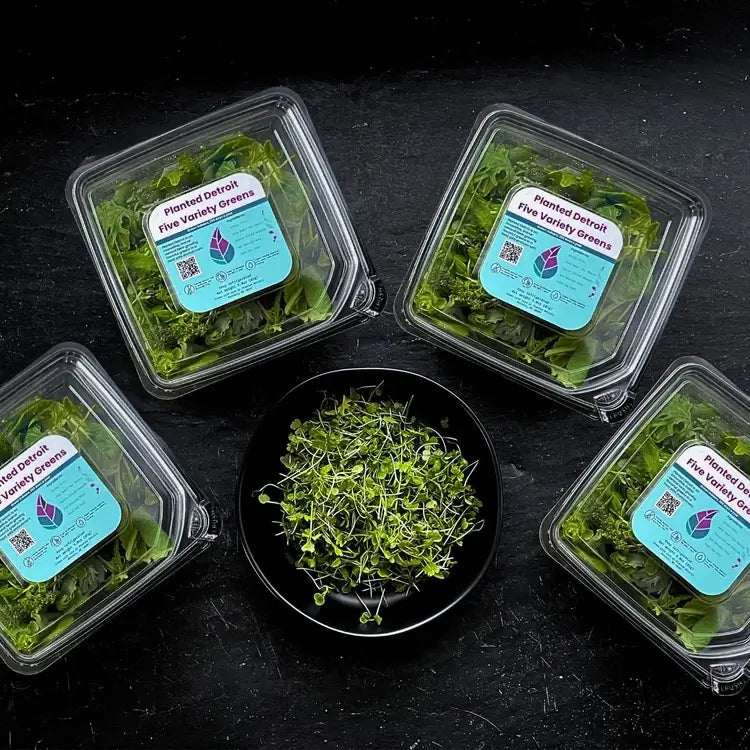
This is also where sustainable farming comes into play. Indoor systems use water efficiently, minimize land impact, and allow consistent harvest cycles regardless of weather. Crops like Garden Mix Microgreens, Broccoli microgreens, and edible flowers are grown in this system, demonstrating how sustainable farming practices translate into everyday access to food. When farming happens inside the city, food systems are closely connected.


Salad Meal Delivery as a Bridge Between Farm and Fridge

Growing food locally is one part of food security. Getting it into homes consistently is another. Salad meal delivery brings the vertical farming products directly to households and offices in Detroit, Royal Oak, Ferndale, Warren, Southfield, Berkley, and Oak Park. For residents who don’t have time for multiple grocery trips or who may have limited mobility, reliable delivery gives ready access to fresh greens.
Ready-to-eat Salad Bowls reduce friction. Varied options like Sweet & Savory, Pearled Couscous, Protein Fusion, and Michigan Summer come fully prepared and packed with vegetables. They don’t require extra prep, which makes fresh food a more practical reality. If you’re in the Detroit metro area, checking your address for salad meal delivery is one of the simplest ways to bring consistently fresh greens into your weekly routine.
Supporting Community Efforts Around Food Security

Community-focused partnerships, whether with local nonprofits, mutual aid networks, shelters, or neighborhood programs, strengthen the ecosystem. Donations of greens or Salad Bowls to community events and food initiatives help extend access beyond traditional retail models.
Participating in youth cooking classes, community dinners, or neighborhood gatherings reinforces the idea that fresh greens belong everywhere and not just in office lunches. Seeing a 5 Variety Greens Mix appear in a community meal carries as much meaning as seeing it on a desk downtown. The philosophy is simple: to contribute to food security by participating in a broader network of organizations working to make healthy food more accessible across Detroit.
Building Accessible, Flexible Options for Detroit Families
Salad Bundles, available in 5, 10, or 20 packs, allow families to spread the cost and access across the week. Parents balancing work and after-school schedules benefit from quick, vegetable-forward dinners. Seniors or residents with limited mobility benefit from predictable deliveries that reduce the stress of going out and shopping for fresh ingredients.
Kid-friendly bowls, lighter dressings, and add-ons like microgreens make it easier for different family members to actually eat the greens they receive. None of these would have been possible without sustainable farming. Efficient growing practices combined with accessible packaging create a practical contribution to everyday food security in Detroit homes.
Education and Visibility: Making Local Food Systems Feel Close to Home
Long-term food security largely depends on awareness. Farm tours, school visits, and educational content about vertical farming help Detroit residents understand where their greens come from. When students visit a working urban farm in Islandview, the food system feels closer and not distant.
Blog content and social posts explaining how to use 5 Variety Greens Mix, microgreens, and Salad Bowls extend that learning into the kitchen. When people understand how to use fresh ingredients, they are more likely to incorporate them into regular meals. Seeing a large-scale indoor farm operating inside Detroit shifts perception. It reframes what local food production can look like in an urban environment.
How Detroit Residents Can Plug Into Planted Detroit’s Food Ecosystem
Supporting food security requires small steps towards it. Check your zip code for salad meal delivery and consider starting with a weekly Salad Bundle. If you’re part of a school, nonprofit, or neighborhood group working on food access, explore potential collaborations or educational visits. Use Salad Bowls and greens for community events so more people experience locally grown produce firsthand. Detroit’s evolving food security landscape requires solutions at multiple levels. A vertical farm in Islandview, year-round greens, Salad Bowls, Salad Bundles, and a consistent salad meal delivery model work together to make fresh produce more visible, accessible, and easier to eat regularly.
Sustainable farming here isn’t a buzzword. It’s a daily practice that involves growing efficiently, harvesting locally, and delivering directly across the metro area.
Explore Planted Detroit’s Salad Bowls and Salad Bundles and see how adding one local delivery a week can support both your table and Detroit’s broader food system.


